
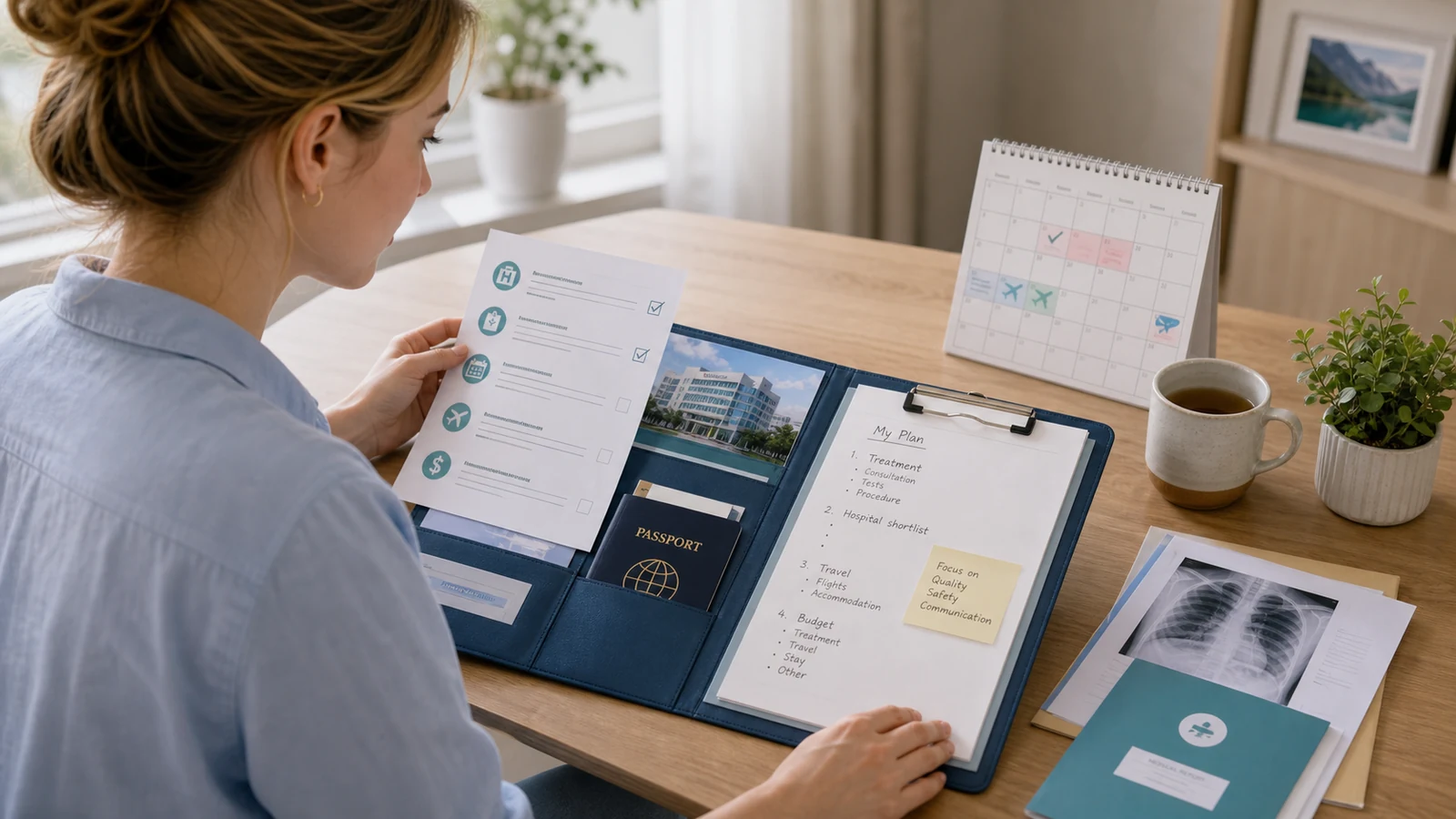
The easiest problems to solve in China are the ones you handle before you fly. Most first-time medical travelers do not run into trouble because they forgot one advanced medical document. They run into trouble because they arrive with weak payment backup, poor phone setup, scattered records, or no clear first hospital route.
Use this checklist if you expect a planned consultation soon after arrival, a diagnostic visit in the first week, a treatment trip that may require tests or admission, or any hospital visit where records, apps, and payment need to work on day one.
What to prepare this week
Start with the core items: passport, visa and entry documents, insurance card or policy details, emergency contact details, the local address in China if known, and a digital copy of the key documents. If you already know how your insurer handles claims, save that information too. Some policies support direct billing in selected settings, while others require you to pay first and claim later.
What to save on your phone
A useful China medical trip is usually also a digital trip. Arrive with a working phone, roaming or local connectivity, WeChat, Alipay, email access, cloud storage or another safe place for files, and screenshots of the appointment, hotel, and hospital details.
Hospital systems often tie booking, payment, reports, and receipts to digital channels. If your phone setup is weak, the hospital visit becomes harder very quickly, especially when verification messages or app-based payments are involved.
What medical information to organize
Carry a short English medical summary with the current condition or main symptom, allergies, current medicines, recent surgeries or major treatments, and the most relevant recent test results. For many patients, that one-page summary is more useful at the front desk or in a short consultation than a large unsorted folder.
Then add the records that actually matter for your case: prescription copies, imaging reports, lab reports, specialist letters, pathology reports, pregnancy-related records, or discharge summaries. Keep them organized by date and type so the doctor does not have to search through everything during a short visit.
What to do about payment before you leave
Go in with at least two payment paths. That usually means one main bank card or mobile payment option, one backup payment method, enough accessible funds for a first outpatient visit, and a realistic plan if direct billing does not work.
Hospital payment in China can be efficient, but foreign payment setup is not always smooth. Do not test your only payment method for the first time at the cashier.
What to confirm about hospital access
Before arrival, try to confirm which city you are likely to use first, which hospital or clinic is the first realistic option, whether English support matters for the case, whether the facility is public, private, or international, and whether the insurer recognizes that route. If you already know the likely specialty, save it in advance. Starting from zero after landing wastes time.
What small details save a lot of stress
Small details help more than people expect: the hotel or residence address in Chinese, the Chinese name of the hospital, the Chinese name of the department if known, the insurer’s emergency or claims contact, a typed note with the main symptoms, and a typed note with the medical history.
Official hospital preparation guides from NHS hospitals often reflect the same idea in a simpler setting: bring the exact details that reduce friction at the point of care. In China, those details can also help taxi drivers, front-desk staff, and payment counters.
Add accommodation registration to the travel checklist
If you stay in a hotel, the hotel normally handles temporary accommodation registration. If you stay in a non-hotel residence, the National Immigration Administration says the foreign national or host must register with the local public-security authority within 24 hours. Confirm the current local process before travel, especially when the stay address changes.
If you expect a consultation soon after arrival
Write down a short plan before you travel. It should answer five basic questions: what problem you are trying to address, what specialty is most likely, whether the first step is consultation, testing, or treatment planning, whether cost, hospital choice, or timing is the main constraint, and what documents you want to collect during the visit.
If you cannot answer those points yet, you are likely to make reactive decisions after arrival.
If you have a chronic condition
Continuity matters more than speed. Check how long the current medicine supply will last, whether a refill may be needed in China, whether follow-up with a specialist is likely, and whether another doctor can understand the records quickly.
Medication gaps and unclear histories are easier to prevent before travel than after arrival.
What people forget most often
The most common misses are predictable: only one payment method, no short medical summary, no backup for phone access or verification, no saved hospital name in Chinese, no plan for keeping receipts and reports, and no clear first hospital route.
Final check before departure
Before departure, try to say yes to a few simple questions: do you have the identity and insurance documents, a short English medical summary, at least two payment options, a clear first hospital route, a phone setup that can support booking and payment, and a way to store records, invoices, and reports?
If yes, you are already in a much stronger position than most first-time visitors.
Next step
Go to if you want to estimate likely spending, if you need realistic care options, or if you want a step-by-step treatment trip path before arrival.
Sources and review note
- covers hotel and non-hotel stays; local implementation may vary.
- The supports the recommendation to prepare payment before the first hospital day.